Imagine a customer asking an AI assistant: “Which activities near Rotorua suit a family with two young children, take less than two hours, and run in wet weather?”
The assistant needs background knowledge, the family's requirements, and reliable information about actual experiences. Three sources help it assemble an answer.
1. What the model learned during training
Training gives a model patterns and background knowledge learned from examples. It is how the model learns language and relationships between ideas.
It is not a complete, live copy of the internet. Your website may not have been included, and the model's learned information may not reflect your current prices, opening hours or offers.
Think of it as what someone remembers from their education. Useful background, but you would still expect them to check today's opening hours before recommending a visit.
2. What the customer brings to the conversation
The customer's question supplies information: where they are going, who they are travelling with, their budget and what matters to them. Earlier messages can supply more detail. Some products may also use saved preferences or memories when those features are enabled.
This is why two people can get different recommendations. A family looking for a gentle wet-weather activity has different needs from a couple looking for an all-day adventure.
For your business, that means the website should explain who your offer suits. If age limits, duration or weather restrictions matter, write them clearly so the assistant can match the offer to the customer's needs.
3. What the assistant retrieves from the web
When web search is used, the assistant can turn the question into search queries, review results and retrieve information from selected webpages. That information becomes part of what it uses to answer.
This is the source you can most directly influence through your website. You can update the details, explain your services and make your public pages easier to read. When an assistant searches for information about your business, those pages give it something current to work with.
The same questions, with and without web search
For our presentation, we asked ChatGPT four factual questions about award recipients, a mathematics lecture and a LEGO part. We first asked it to answer without browsing, then asked the same questions with web access available.
| Result | Without web search | With web search |
|---|---|---|
| Correct answers | 0 of 4 | 4 of 4 |
| Average confidence stated by the assistant | 82.5% | 99% |
| Sources provided | None | Yes |
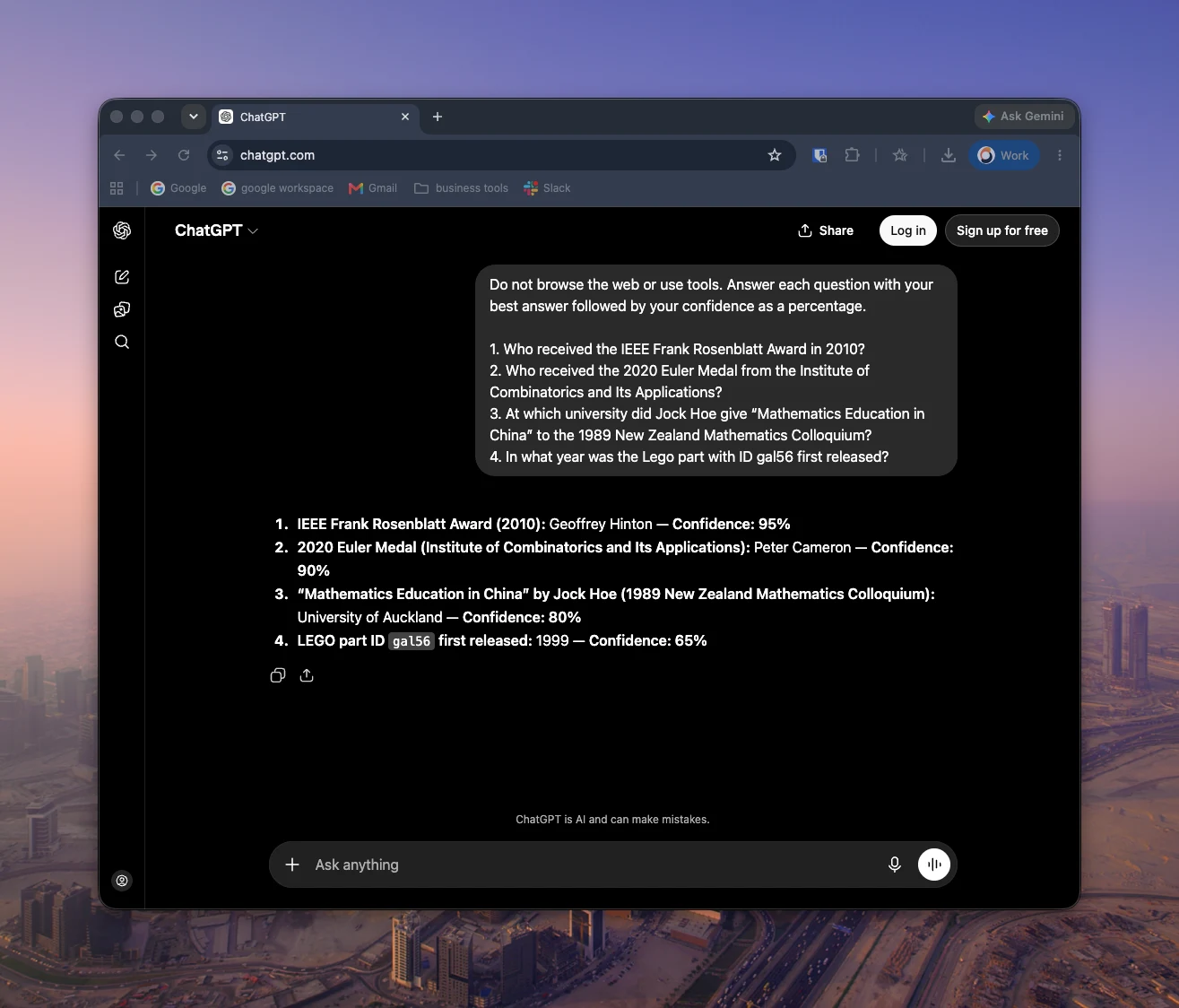
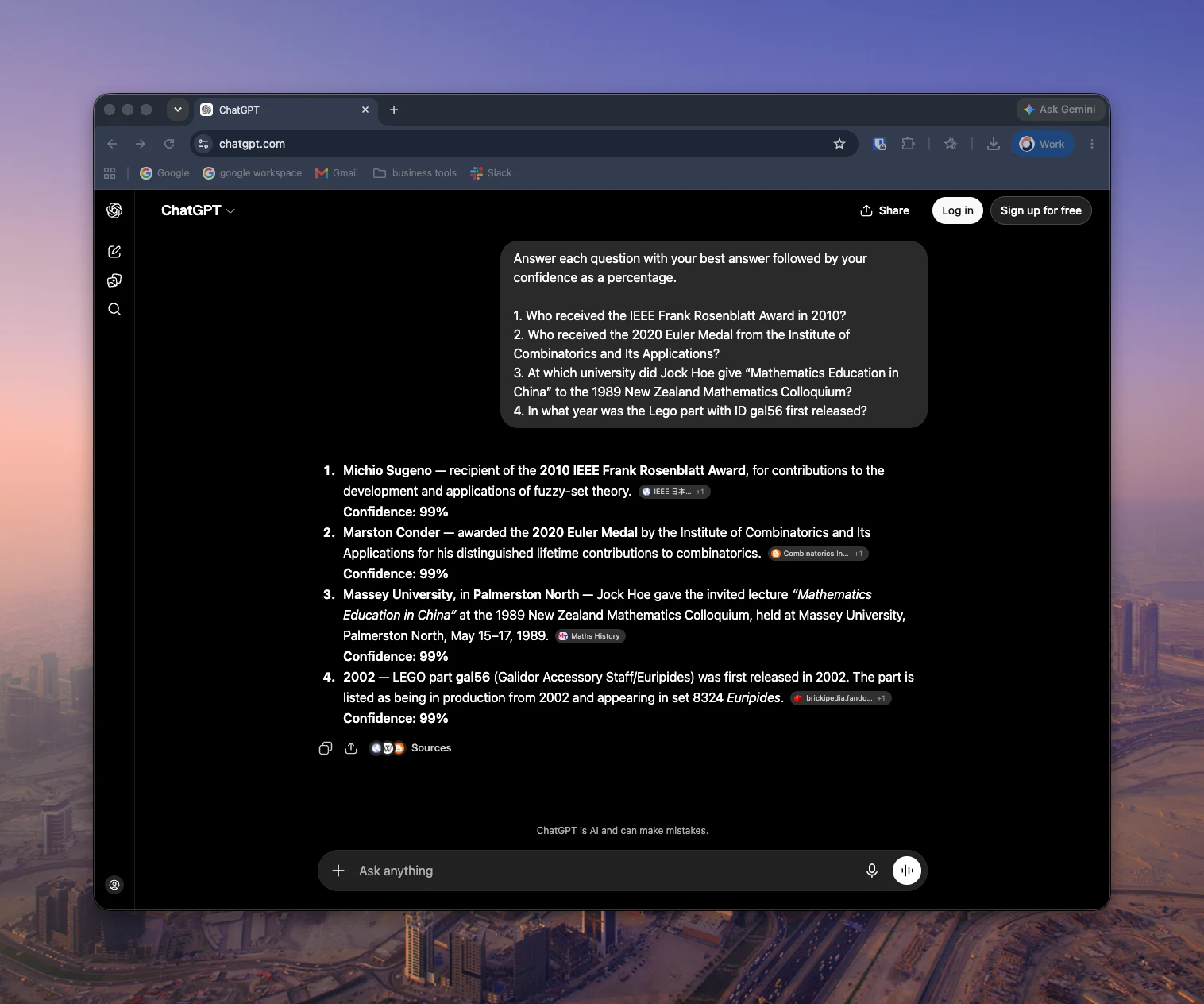
Without web search, ChatGPT gave four believable but incorrect answers. With web search, it answered all four correctly and provided sources.
That's why web search matters for your business. It gives the assistant information to work from beyond what it learned during training, including the current details on your website.
Training gives the model background knowledge. Context explains the customer's needs. Retrieval brings in evidence.
What this means for your website
Start with the information a customer needs to choose you: what you offer, who it suits, where it happens, what it costs, and any conditions that matter.
Then ask two questions: does the website explain those facts clearly, and are the relevant crawlers allowed to reach the pages? The next two articles include exercises to explore each foundation.
Read Can AI Understand Your Brand? next.