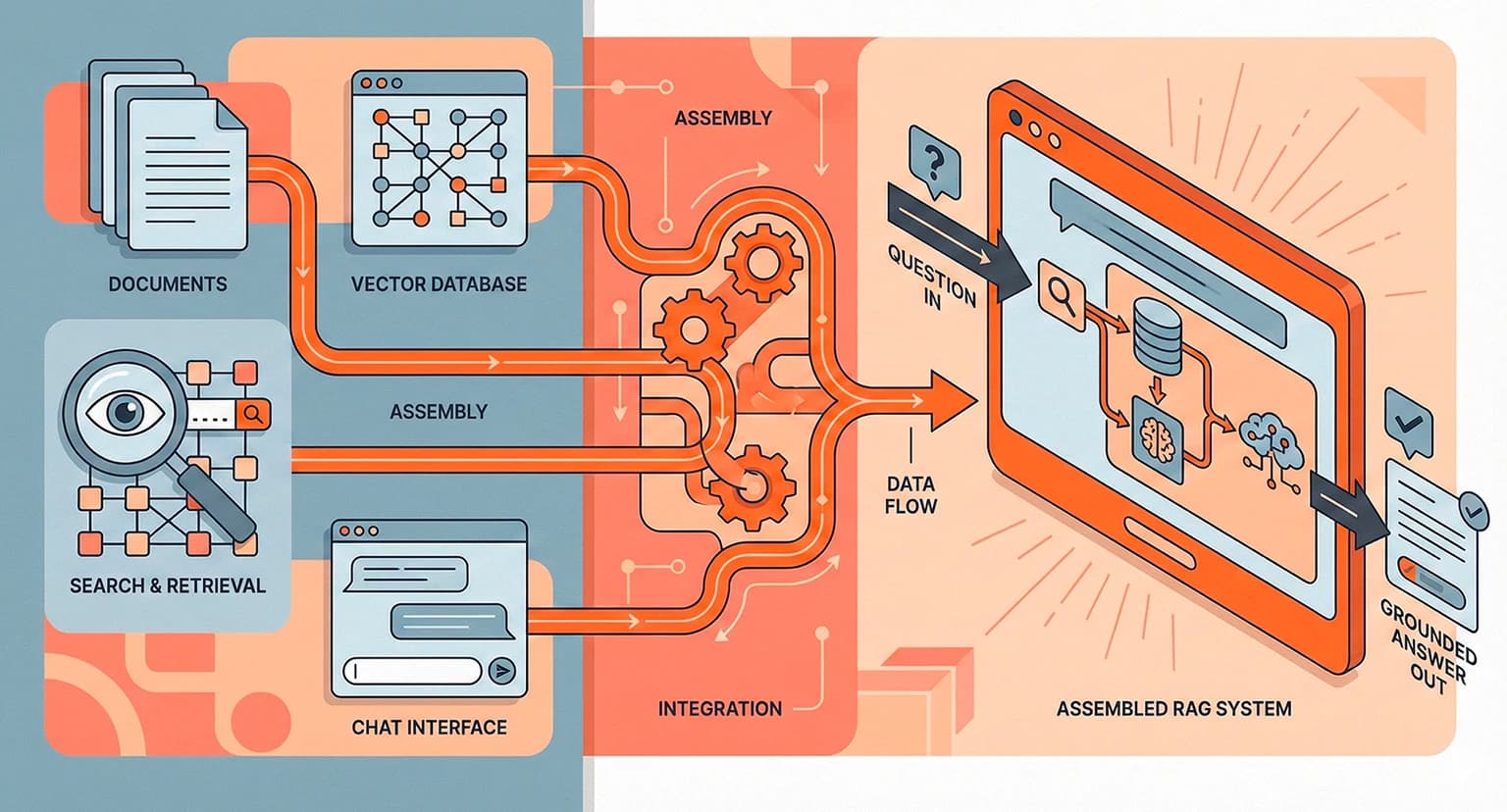
Vector Database
A database optimized for storing, indexing, and querying high-dimensional vector embeddings, enabling fast similarity search at scale.
Why it matters
Vector databases are the storage backbone of every RAG pipeline and semantic search system. Choosing the right one affects retrieval quality, latency, and infrastructure cost.
Why vector databases exist
Traditional databases index by exact values (IDs, keywords). AI applications need to find items by semantic similarity — "show me documents about X" rather than "show me documents containing the word X." Vector databases use approximate nearest neighbor (ANN) algorithms to make this fast even at millions of vectors.
Architecture choices
- Dedicated vector DBs — Pinecone, Weaviate, Qdrant. Purpose-built, feature-rich, but another service to manage.
- Extensions to existing DBs — pgvector (Postgres), Atlas Vector Search (MongoDB). Keep everything in one database, simpler ops.
- In-memory libraries — FAISS, Annoy. Fast for small-to-medium datasets, no persistence.
What to look for
Key differentiators: filtering support (combine vector search with metadata filters), update speed, managed vs. self-hosted, cost per million vectors, and hybrid search (combining vector + keyword search).
Related terms