Citation Authority
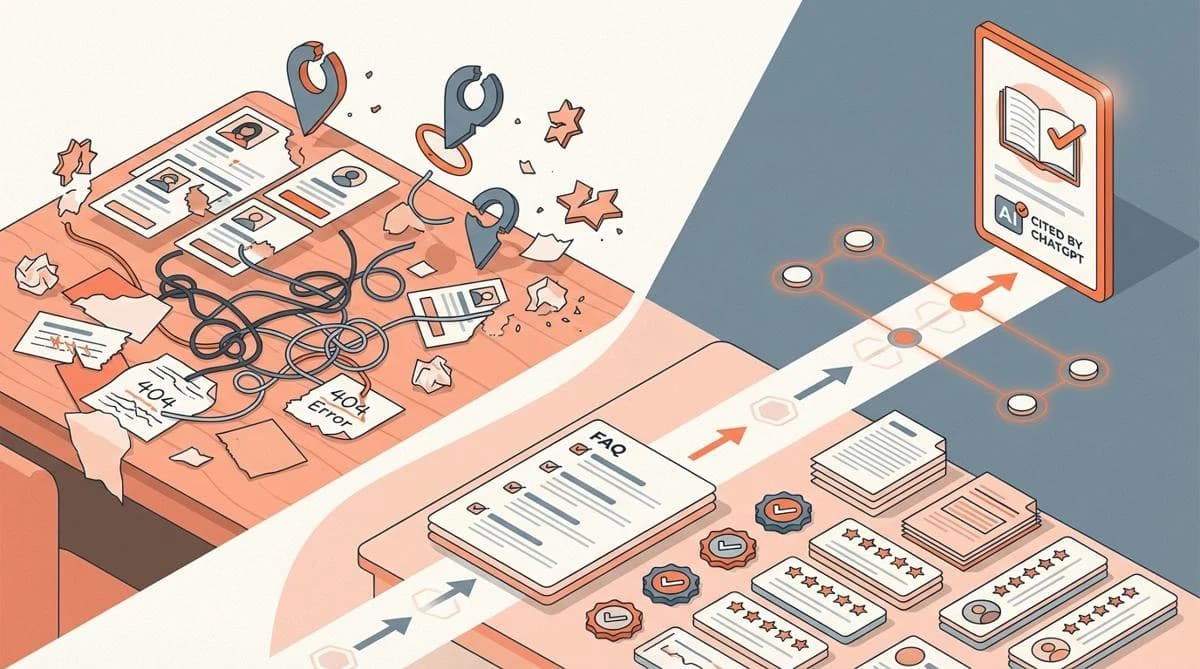
Citation authority is the ranked list of third-party domains that AI assistants actually quote when answering questions about a topic — the AI-search equivalent of a backlink profile.
Why it matters
AI assistants don't just synthesise answers — they cite sources. Tracking which domains they cite (and which of yours rank) tells you where the AI is getting its information, and where you need to be present (your own site, third-party reviews, industry publications, Wikipedia) to actually be quoted.
What it tracks
For each prompt, AI engines pull from a ranked set of source domains. Citation authority captures that ranking: which domains the model quoted, in what order, with what frequency across the prompt set.
Why third-party citations matter
AI assistants disproportionately quote authoritative third-party sources rather than first-party brand pages. If ChatGPT answers 'best CRM for small business' by citing G2, Capterra, and a TechCrunch round-up — and your brand isn't named in any of those — your own marketing pages won't fix the problem alone.
How to use the data
- Find content gaps — domains that cite competitors but not you are pitch lists.
- Track shifts — when AI starts citing a new domain, that domain just became newly important to your channel.
- Spot domains feeding bad info — if AI cites a low-quality source that misrepresents you, that's a content priority for the brand to refute or replace.
Practical advice
Don't optimise just your own pages — your citation authority is also a function of where else your brand appears. Industry publications, review sites, podcasts, and Wikipedia entries often outweigh your own homepage in AI synthesis.
Related terms